Scanform: It is one of the most representative companies in the furniture industry in Colombia, its founder Torsten Platin, born in Sweden, arrived in Medellín in 1954 to found a graphic arts company, a business that did not prosper and the Swedes who accompanied him decided to return home.
Torsten met Beatriz Piedrahita and married him.
With his brother-in-law Aurelio Piedrahita, Carlos Enrique Velez, and Alberto Serani, he founded Muebles Hermes. He traveled to Stockholm and commissioned a collection of home furniture through royalties. At that time, Art Deco and Art Nouveau furniture were still in fashion. Scandinavian design was virtually unknown. Only architects were familiar with Scandinavian designs.
On the famous Junín Street in downtown Medellin, they opened their exhibition warehouse in 1958, and the impact was such that all the carpenters began to copy them.
“In 1960, we decided to start an independent company to manufacture our own furniture. Beatriz liked the name Scanform: Scandinavian Forms; it seemed very exotic to me. I wanted to name it Fornesca: Scandinavian Forms. Of course, the lady won, and in May 1961, we signed the articles of incorporation of Scanform with a capital of 75,000 pesos, in partnership with architect Santes Cook.
“I got the license to manufacture the Pira System from Ulle Pira. I didn't have any equipment, just these scissors, which I still have. With Ulle, I learned everything I know about furniture. I only have a diploma in Graphic Arts. He introduced me to factories in Sweden. I learned everything I know about carpentry.”
They subcontracted the wooden shelves and drawers to Hermes.
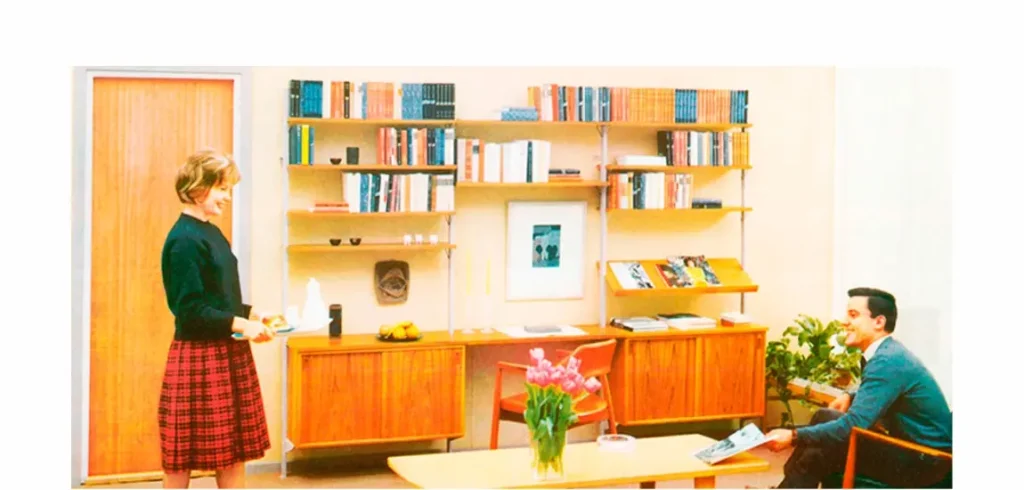
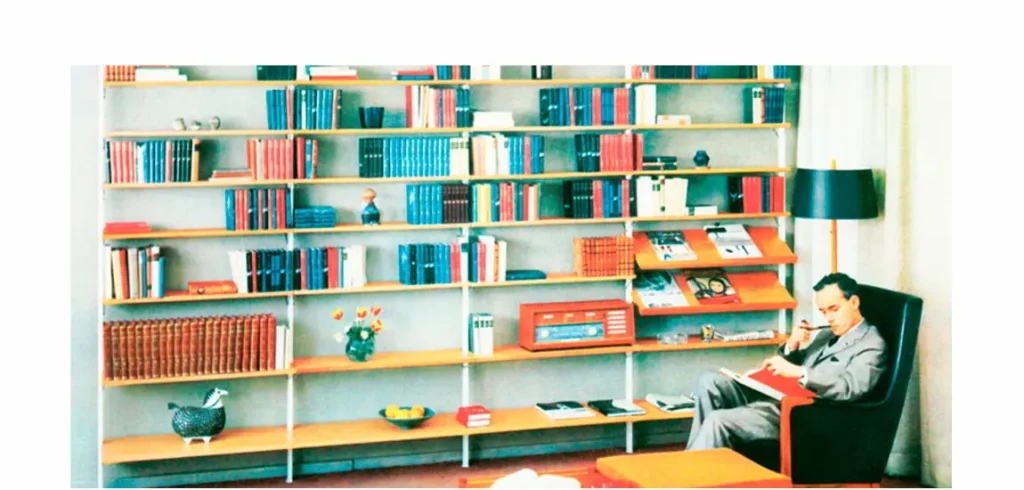
It was the beginning of a time when homes were getting smaller, and it was important to make the most of the space. The profiles were made of extruded aluminum, which they cut and drilled. That line was a success.
The lack of precision when drilling the wooden parts made assembly difficult. “The exact measurements were definitely unknown in Colombia.”
“One day in Copenhagen in 1966, I visited a Swedish furniture expo and saw the Scirocco chair. It changed my life. It was as if I had always been looking for it, and there it was. I asked for the designer and they told me: ‘It’s the architect Arne Norell.’ I called a friend in Sweden and he told me: ‘If I know him, let’s go visit him.’ We found him and he gave me the license to manufacture it in Colombia and I got permission to export it to the United States.”
Norell (1917-1971) founded the Norell Mobel AB factory in 1958. It still produces its furniture. The first Scirocco chairs, also known as Safari, are offered on eBay as vintage at very high prices.
“I asked several designers in Medellín for their opinion, and they told me: beautiful, original, very advanced design, comfortable, but that chair isn't for Colombia. You'll sell 25 or 26.
It took us three years to develop it, bringing in machinery to make the cones ourselves, the conical perforations, and the leather part that Mesace originally made for us. If I had known the complications, I wouldn't have even tried it."
They manufactured them for 10 years, exporting some 14,000 chairs to the United States, each one packed in its own box. It was the first piece of furniture exported by plane, and the weight and volume were precise.
They couldn't be shipped by road, they were terrible and there were no containers.
In Colombia they sold about 8,500 chairs.
The perforations and finishes of the Scirocco's wooden legs and bars are conical and absolutely precise, even the leather is held in place by stitched cones, ensuring it doesn't slip. Since it can be disassembled without screws, the wood must fit perfectly so that the chair, under the weight of the person, fits into the cone, acquiring its rigidity and stability. This is the origin of the 800 line: chairs, sofas, and tables with this same principle of conical perforations, all secured with straps.
The Scirocco chair is a true work of art in Industrial Design.
"I always paid royalties on my designs, and that's how I learned to make furniture, because I could go into companies and see how they were made. Here, they told me it was silly to pay royalties when I could just copy them."
With Camacho Roldan from Bogotá, they founded Scanform International to export furniture, but they were not successful.
“In 1975 I discovered laminated curved furniture with veneer in Sweden and Denmark.
Since it didn't exist in Colombia, I decided to try it. I had no idea. I was in Denmark three times, watching and learning."
They started by importing two presses with their generators and a new adventure began in 1976. The presses were too high and couldn't pass under bridges. They asked if we could bring them horizontally, and when they arrived, the generators weren't working.
Electrical contractors in Medellín tried to fix them, but they had no idea how high-frequency heating works, which is applied to the sheet metal when it is pressed.
“I called asking for a technician, and the technician said in Denmark that the Ministry of Health was talking to him about getting five vaccinations for tropical diseases. We explained that he only needed yellow fever and that in Medellín, due to the altitude, he wouldn't have any problems.
"Finally, he made up his mind. He arrived with his instruments and tools, and in seven hours he had everything working and said, 'I'm leaving.' We convinced him to stay for a week, telling him that there was a harsh winter back home and that he should enjoy his stay at the Country Club. He stayed and taught us how to do all the tests and get our first production."
They did not have a veneer cutter and bought one from Hermes furniture, which had a Marunaka. A few years later, they bought their own, larger Marunaka, and completed the machinery for the leather workshop.
They began producing pressed wood furniture using their own Scandinavian molds and designs, being the first in the country and still the only ones today. They brought a wood dryer from Germany and the company was working at full speed when, in August 1982, a massive fire broke out in the factory, destroying everything.
Torsten recounts that that night, upon returning from the conflagration, he told his wife, "We have nothing," and she replied, "You're right, we don't have a factory, but what factory are we going to have?" They weren't well insured, and he can't explain how they managed to survive. All his friends patted him on the back and said, "Keep going, you're very handsome."
“A friend lent me some money and little by little we bought new machines and in a year and a half we were back up and running.”
The prestige of its furniture, the trust of its suppliers, the tenacity of its owners, and the support of the community literally made Scanform rise from the ashes.
In 1981, Otto Elger and Camila Platin married. In 1983, Otto joined Scanform as a partner and began producing collapsible flat-pack furniture and office furniture. They merged Otto's Scandilineas factory, which produced flat-pack furniture, and Scanform. They purchased a large Danish press and began a new era.
In 1987, Mr. Platin retired, handing over management of the factory to the new generation.
Camila and Otto dedicated themselves fully to the company, following the philosophy of Scandinavian design furniture: high quality, excellent materials, and magnificent service.
They introduced new lines for coffee shops and are continuing to be very active in the market.