The first indigenous furniture in Colombia after the hammock were ceremonial armchairs, where the shaman sat to prepare his prayers and drinks, while the indigenous people squatted around them.
These armchairs were carved from logs or stones and some were modeled in clay.
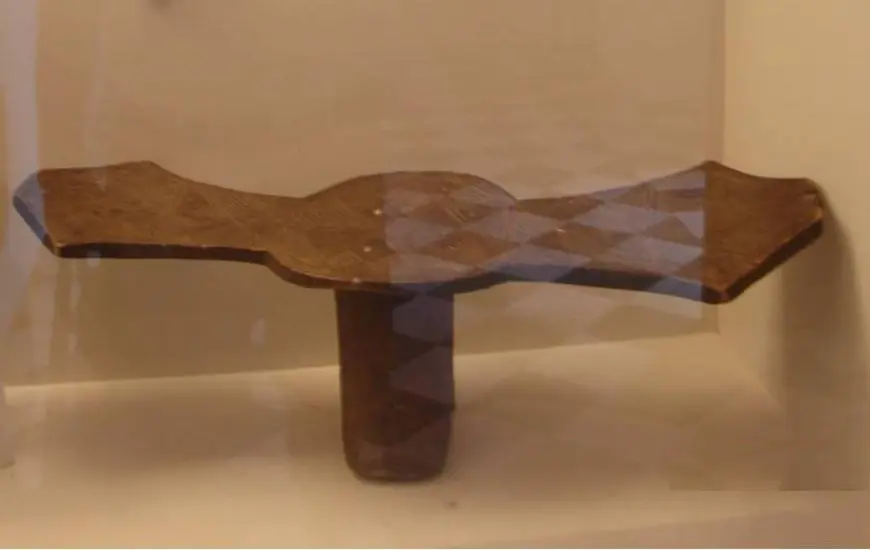
Butaco Kalamary – Cartagena Inquisition Museum, used by shamans or tribal chiefs.
Turtle-shaped indigenous seat from southern Colombia and decorated with Inca motifs, Jaime Gutierrez Lega collection.
Ceremonial armchairs, Casa del Alabado Museum, Quito, collection of Inca armchairs made of stone, wood and ceramics.
Vaqueta stool: The simplest chair made of wood and rawhide, perhaps the first chairs made by our artisans under the direction of the Spanish Conquistadors who required furniture to sit on, introducing the indigenous people to carpentry, taking advantage of the immense amount of wood available at the time.
The priests who followed the conquistadors to convert the indigenous people and save their souls, built with their help, ramadas that served as churches and provided them with pews where they received evangelization.
They were also taught to work wood and sculpt sacred images for temples, thereby acquiring great skill in the use of carpentry tools. The Quito school is a magnificent example.
The first official school of arts and crafts was founded in Colombia by the Salesian Fathers on February 11, 1890, when seven Salesians arrived in Barranquilla, invited by Monsignor Eugenio Biffi, Archbishop of Cartagena who had visited Don Bosco in Turin, and founded the Salesian School Leon XIII of Arts and Crafts in Bogotá with 50 students and workshops in carpentry, tailoring, shoemaking and saddlery.
Rafael Nuñez was President and Joaquin F. Velez was Ambassador to the Holy See.
They then spread to Medellín, where they founded the Pedro Justo Berrio Institute of Arts and Crafts.
It was the birth of technical education in the country.