Our indigenous people used a multifaceted piece of furniture that amazed the Spanish when they discovered our continent, and that piece of furniture was the hammock.
Their way of life was very practical, and they owned no objects that weren't absolutely necessary. Only the chiefs and shamans used chairs or stools as symbols of authority; they were the only ones who sat; the rest of the community remained standing.
To rest, to cook and to eat, they squat.
Amazonian tribes today are able to remain squatting for long periods of time. I shared this experience during a fishing trip on the Apaporis River. In the heart of the jungle, we encountered a community of four families living in a chagra (farmhouse), using only baskets to store their belongings and hammocks for each family member. They laughed at us because we couldn't stand squatting.
After about five years, when the land is exhausted or no longer yields a harvest of cassava, plantains, papayas, and some vegetables, and they have also hunted the surrounding animals, they set off, hammocks slung over their shoulders, looking for another place to settle and allow the forest to return. This is the only way to keep it intact.
When they saw us fishing and releasing the fish, they would ask our guide in their language, since they didn't speak Spanish, "What are you doing?" We would reply, "We're fishing," and the indigenous people would say, "You're just playing because you catch fish to eat or sell, but not to release it back into the water."
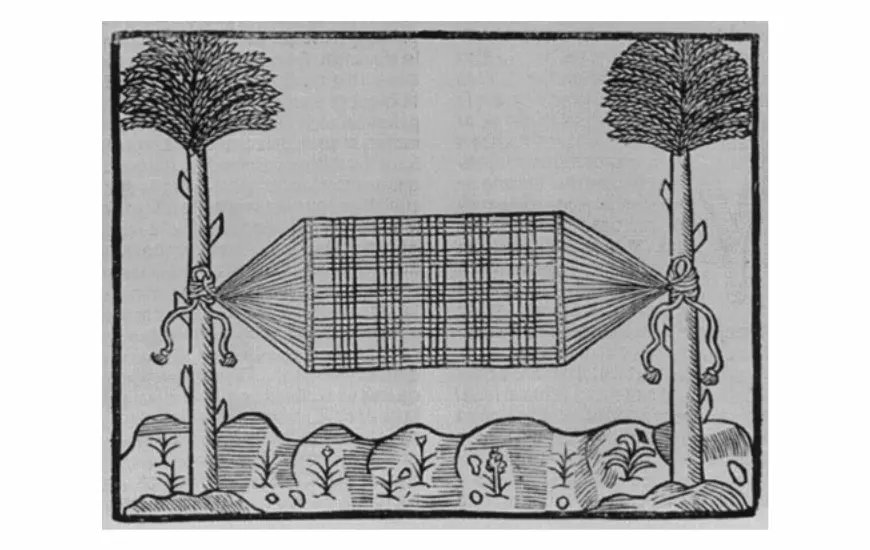
Such is the versatility and practical utility of the Hammock that Gonzalo Fernández de Oviedo, Governor of Hispaniola, now the Dominican Republic and Haiti, sent Charles V an image of a hammock praising the ingenuity of these people who invented, with a net made of interwoven plant fibers, a bed that they hung from the trees where they spent their daily family life.
The hammock was immediately adopted by Europeans who found it throughout the Caribbean, Mexico and South America.
Hamock bark was used to weave the hammock, hence its name.
Columbus recorded in his diary of his first voyage on October 17, 1492, “People sleep in nets among the trees.”
There is a small gold hammock among the jewels kept at the Gold Museum in Bogotá.
All the navies of the world used the Hamaca until 1860.
Sailors who had previously slept on the floor with all the discomfort, now rested in a hammock, where they hung close together so that they could all absorb the rocking motion of the ship.
In the case of warships, hammocks were hung over the cannons, thus taking advantage of space that was never used.
Sack hammock made from an unfolded fique sack.
The Wayuu hammock used in the Guajira has a beautiful filigree weave that hangs from the sides and is not just an ornament, it also serves as a blanket on cold desert nights.
Our indigenous people, who didn't invent the wheel, were ahead of the rest of the known world by developing a simple and practical hammock. The most versatile piece of furniture in existence.
La siesta.com